Drop handlebars are, in a word, ingenious. I am in love.
The last time I had a bike with drops it was my mother's old something or other from the 80's. I never used the drops because they intimidated me and the bike was quickly traded in for the Diamondback. In college when I rode the Varsity, I never used the drops either, because, well, they still intimidated me (plus the bars had this weird foam on them that made switching positions awkward and uncomfortable. Other than that, I've always had risers or flat bars. However, now that I've gone back to using the Varsity (hopefully, I'll get some good news from the LBS today) and I'm a more confident cyclist, I've really enjoyed having them.
Drop handle bars basically look like this:
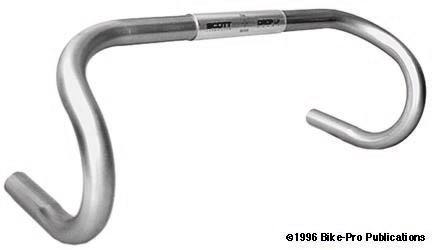
There are some modifications on the design such as flatter curves, or flattened tops, and grooves for cables so they lay nicely under the bar tape. Drop bars are typically found on road or touring bikes. They are also common on Cross bikes. The style of the drops depends on the bicycle and its rider. Some people find the traditional style (shown above) to be more comfortable and others prefer ones that have flatter curves (common on racing bikes). No matter their style, the drops provide 4 hand positions:

The great thing about having drop bars is that they allow you to change your position in response to the conditions. Let's face it, most of us that commute encounter varying terrain and obstacles throughout the ride so it helps to have options. In the mornings, most of my ride is a long climb. When I take the Varsity, I'm more comfortable and efficient. In the afternoon, there's almost always a strong wind from the west, so being in the drops has greatly reduced the resistance. Another advantage is that they allow you to move around more, reducing hand and arm fatigue on those long rides. Plus, they can be tipped up or tipped down depending on the cyclist's needs. While we were at the LBS last week, someone brought in the same model Redline my husband has. Unlike my husband that left his bars in the stock position, this guy had tipped his up for his comfort. It looked completely different.
This morning I took the FX to work. After using the Varsity the last few weeks, I really noticed how handlebars dictate how I ride. Since I've fallen in love with them, I really missed the drops this morning. I know I will miss them during the climb through the headwind this afternoon. The plan, depending on how much of a hit we take with the derailleur repair, is to eventually install drops on the FX. I'm looking forward to my most versatile bicycle being even more versatile.
Of course, its up to the cyclist on the type of bars they use. I've noticed a variety of styles here in Akron on hybrids, road, and mountain bikes. I've seen risers, flat, bullhorn, mustache, upright, butterfly, and even ape hanger bars. Yes, that means there are many more people on bikes in AK-Rowdy than there were in 2010.
No matter what bars they use, I'm glad they're riding.
If you want to see all sorts of weird handlebar configurations, check out Bike Snob NYC's blog. There are some real doozies on there.
 |
| via Bike Snob NYC |
I wrestled with flat bars or drops for my Xtracycle and eventually decided on drops despite acknowledging that flat bars would give me better control getting on and off the bike when loaded down.
ReplyDeleteThere are days I wish I could switch back and forth on the one bike, but alas!